
An illuminated stone backsplash can completely change the appearance of a kitchen, bar, bathroom or feature wall. Materials such as onyx and highly translucent quartzites can look beautiful under normal lighting, but when properly illuminated from behind, colors, veining and crystalline details within the stone become dramatically more visible.
At Nu World Custom Lighting and Design, we have specialized specifically in architectural backlighting for more than 17 years. Over that time, we have supplied custom LED backlighting systems for stone backsplashes ranging from relatively small residential kitchen niches to large illuminated walls and architectural features.
The key to a successful backlit stone backsplash is creating uniform illumination behind the material without allowing individual LEDs, bright areas, panel transitions or other components of the lighting system to become distracting through the finished surface.

What Types of Stone Can Be Used for an Illuminated Backsplash?
Onyx and Cristallo quartzite are two of the best-known materials used for backlit stone backsplashes, but they are not the only options.
Depending on the individual slab, certain quartzites, marbles and other natural stones can also contain enough translucent material to produce impressive results when illuminated from behind. Translucent architectural surfaces such as resin, glass and some solid-surface materials can also be backlit using similar principles.
The important point is that translucency varies enormously. Two slabs sold under the same stone name can transmit very different amounts of light, and translucency can even vary significantly across a single slab.
For that reason, we recommend testing the actual material before designing the lighting system. Our article on how to test translucent stone for backlighting explains a simple way to evaluate the slab before fabrication and installation.
Backlit Onyx Backsplashes
Onyx has been used for architectural backlighting for many years because of its natural translucency. Honey, white, blue, green and multicolored onyx can all produce very different effects when illuminated.
Some onyx is relatively diffused, while other slabs contain areas that are considerably more transparent. This variation is part of what makes natural onyx so visually interesting, but it also means the lighting behind it needs to be planned carefully.
The objective is not to make the lighting system visible. It is to make the stone itself appear to glow.
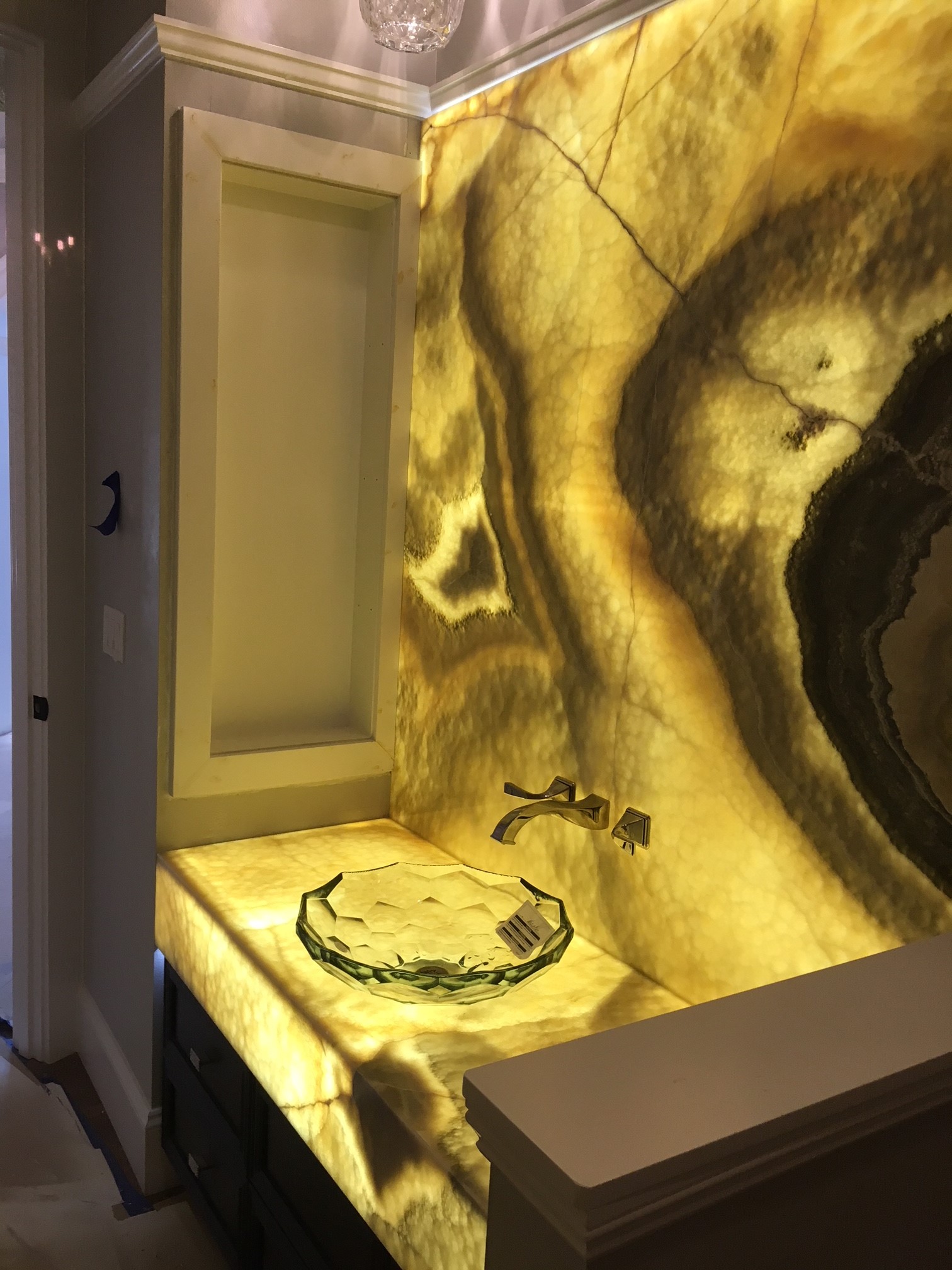
For more information specifically about this material, see our Onyx LED Backlighting page.
Backlit Cristallo and Quartzite Backsplashes
Highly translucent quartzites can produce an entirely different appearance from onyx. Cristallo in particular can contain highly crystalline areas that transmit a significant amount of light.
Those crystalline areas can create spectacular depth when illuminated, but they can also make the material less forgiving. If the lighting behind the stone is uneven, highly transparent sections may reveal hotspots, panel transitions or other inconsistencies.
This makes testing, panel layout and diffusion particularly important when designing a backlit quartzite backsplash.
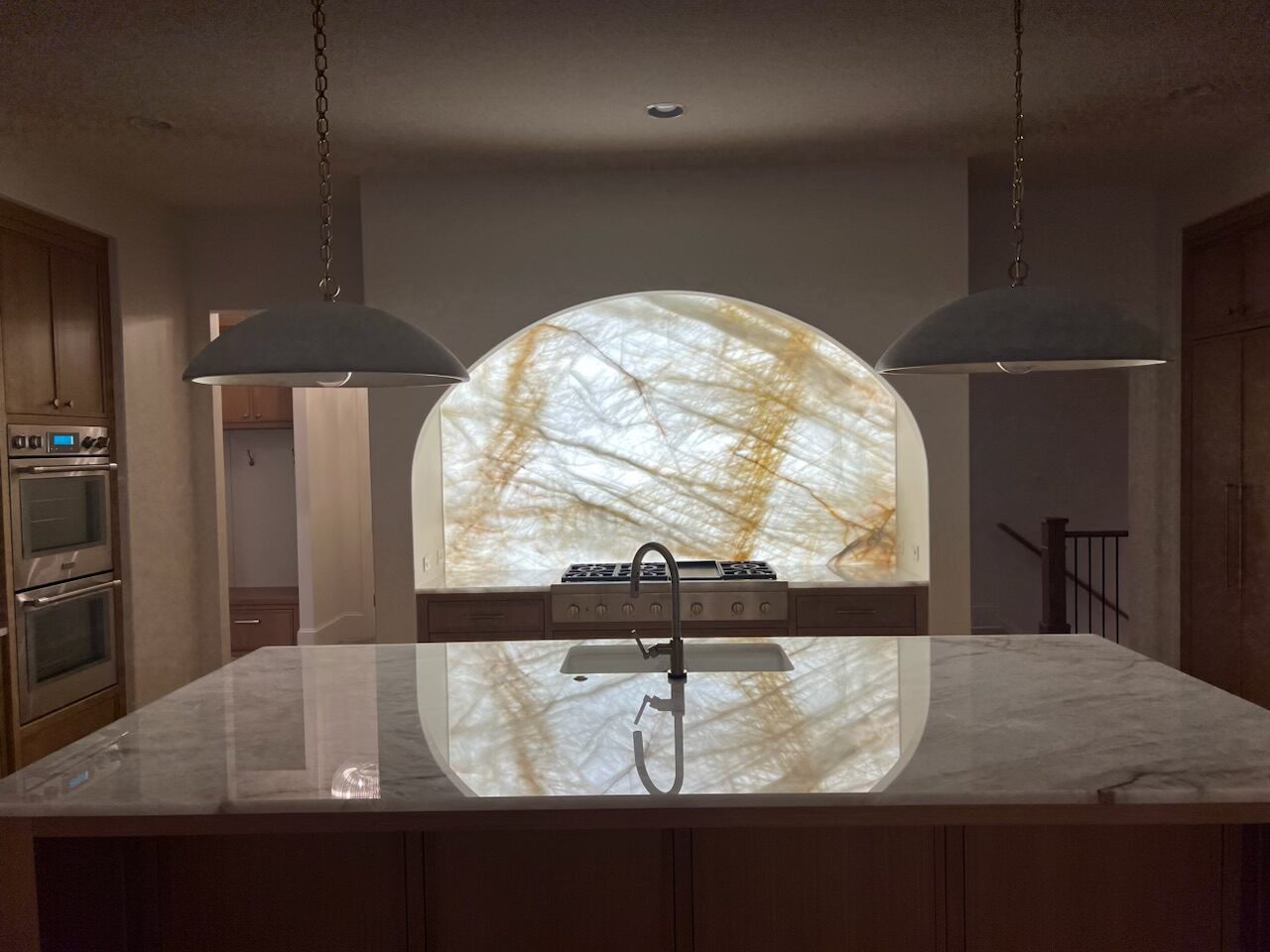
We have a separate technical article explaining how to backlight Cristallo quartzite, including the additional considerations created by highly crystalline stone.
What Type of LED Lighting Should Be Used Behind a Stone Backsplash?
There are several ways to illuminate translucent materials, but the goal is always the same: create a consistent field of light behind the finished surface.
For many backsplash installations, we use custom frameless edge-lit acrylic LED light panels. These panels are approximately 1/4 inch (6 mm) thick and can be manufactured to fit the dimensions and shape of the backsplash.
The shallow profile is particularly useful in kitchens and other finished spaces where there may be very little room available between the wall and the stone.
Individual LED strips and direct backlighting systems can also be used. However, the required cavity depth and diffusion need to be considered carefully so that individual LEDs or bright lines do not become visible through the surface.
You can see the different systems available on our LED backlighting products page.

Spacing and Diffusion Behind the Stone
The amount of space required behind an illuminated backsplash depends on the lighting system and the translucency of the material.
With a thin edge-lit LED panel, the required assembly can be considerably shallower than a system using individual LED strips. For vertical applications, an air gap or diffusion layer can be used where additional separation is required.
Extremely translucent materials may also benefit from a diffusion layer between the lighting and the stone. The purpose is to soften any visible transitions and create a more uniform illuminated surface.
There is no single spacing measurement that works for every backsplash. The correct approach depends on the stone, lighting technology, available cavity depth and desired finished appearance.
Preventing Hotspots and Visible LED Patterns
One of the biggest mistakes in stone backlighting is assuming the stone itself will hide an uneven lighting system.
Highly translucent stone can do exactly the opposite.
Individual LEDs, bright lines, dark areas and transitions between lighting panels can become visible through transparent sections of onyx or quartzite if the system behind the stone is not properly designed.
This is why we recommend testing the actual stone together with the lighting system whenever possible before permanently installing the backsplash.
We cover this issue in considerably more detail in our article about hotspots and visible panel seams in backlit stone.
Installing LED Backlighting Behind a Vertical Stone Backsplash
A backsplash is a vertical installation, so its construction is different from a horizontal backlit countertop or kitchen island.
The LED panels, stone support, electrical wiring, diffusion and access to the power supply all need to be considered before the stone is installed.
Whenever possible, the stone should be mechanically supported rather than relying on large amounts of adhesive between the illuminated surface and the stone. Adhesives positioned behind highly translucent areas can sometimes become visible when the backsplash is illuminated.
We have a separate installation article covering these details in depth:
How to Install LED Backlighting Behind Stone on Vertical Surfaces
That guide covers mounting the LED panels, supporting the stone, diffusion, wiring and other considerations that apply specifically to vertical installations.
Choosing the Right Color Temperature
The LED color temperature can substantially change the appearance of an illuminated stone backsplash.
Warm lighting can emphasize amber, cream and gold tones, while a neutral white can provide a more natural representation of white, blue, gray and multicolored stone.
There is no single color temperature that is ideal for every material. The best choice depends on the natural colors within the slab and the surrounding interior finishes.
Whenever possible, we recommend viewing the actual stone under different color temperatures before making the final decision.
For more information, see our article on choosing the best color temperature for backlit stone.
Plan the Backsplash Before the Stone Is Fabricated
The lighting system should be considered early in the project rather than after the stone has already been fabricated.
Electrical locations, panel dimensions, outlets, switches, cabinetry, stone seams and other penetrations can all affect the final lighting layout.
Custom LED panels can also be manufactured around certain shapes and obstacles, allowing the lighting layout to follow the architecture of the backsplash rather than trying to adapt a standard lighting product after construction has already begun.
Power supplies and other serviceable electrical components should remain accessible so that the entire backsplash does not need to be removed simply to service an electrical component in the future.
Creating a Successful Backlit Stone Backsplash
A successful illuminated stone backsplash starts with choosing and testing the material before the lighting system is finalized.
Onyx, Cristallo quartzite, other translucent quartzites, certain marbles, glass, architectural resin and other translucent surfaces can all be candidates for backlighting, but each material responds differently to light.
The goal should always be the same: create smooth, uniform illumination that allows the natural character of the material to become the focal point.
Nu World Custom Lighting and Design has specialized specifically in architectural backlighting for more than 17 years, supplying custom LED light panels for residential and commercial projects throughout North America.
For additional examples, visit our Featured Backlighting Projects or Completed Project Gallery.
For more detailed information about designing a backlit stone installation, download our Backlighting Guide.