
Onyx is one of the most dramatic natural stones to backlight. Its natural translucency allows light to travel through the stone, revealing colors, veining and patterns that can look completely different once the stone is illuminated.
At Nu World Custom Lighting and Design, we have specialized specifically in architectural backlighting for more than 17 years. During that time, onyx has remained one of the most impressive materials we work with for illuminated kitchen islands, countertops, bars, backsplashes, feature walls and other architectural surfaces.
A successful backlit onyx installation is not simply a matter of placing LEDs behind the stone. The goal is to create a uniform source of light behind the onyx while preventing individual LEDs, bright areas, dark areas or panel transitions from distracting from the natural beauty of the stone.
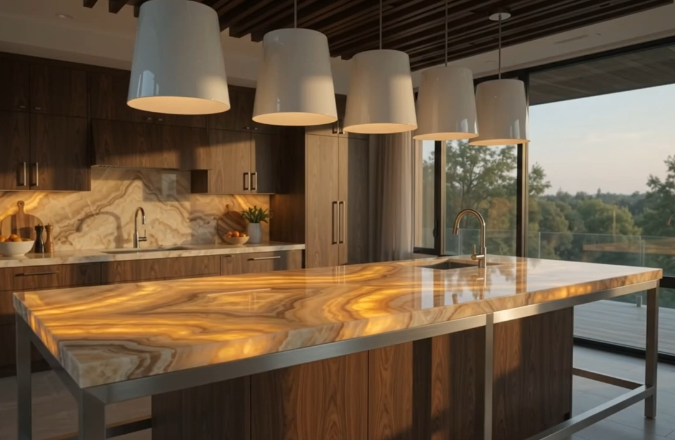
Why Does Onyx Work So Well for Backlighting?
Onyx can contain highly translucent areas that allow a significant amount of light to pass through the material. When properly illuminated, colors and details within the stone become much more pronounced, creating an effect that cannot be achieved with conventional lighting from above.
However, every piece of natural onyx is different. One slab may transmit light extremely well across most of its surface, while another may contain dense veins and more opaque areas. Even different sections of the same slab can respond differently to light.
For this reason, we always recommend testing the actual stone before finalizing the backlighting system. A strong light source placed behind different areas of the slab will quickly show how translucent the material is and identify areas that may require additional attention when designing the lighting layout.
What Type of LED Lighting Should Be Used Behind Onyx?
The objective when backlighting onyx is to create a uniform illuminated surface behind the stone. You should see the illuminated onyx, not the individual lighting components behind it.
For many of our projects, we use custom frameless edge-lit acrylic LED light panels. These panels are manufactured to suit the dimensions and layout of the project and are approximately 1/4 inch (6 mm) thick, allowing the lighting system to remain extremely shallow.
Unlike individual LED strips positioned behind the stone, an edge-lit panel creates an illuminated surface across the panel itself. This can make it much easier to achieve consistent illumination in applications where there is limited space available behind the onyx.
You can see more information about the different systems we use on our LED backlighting products page.
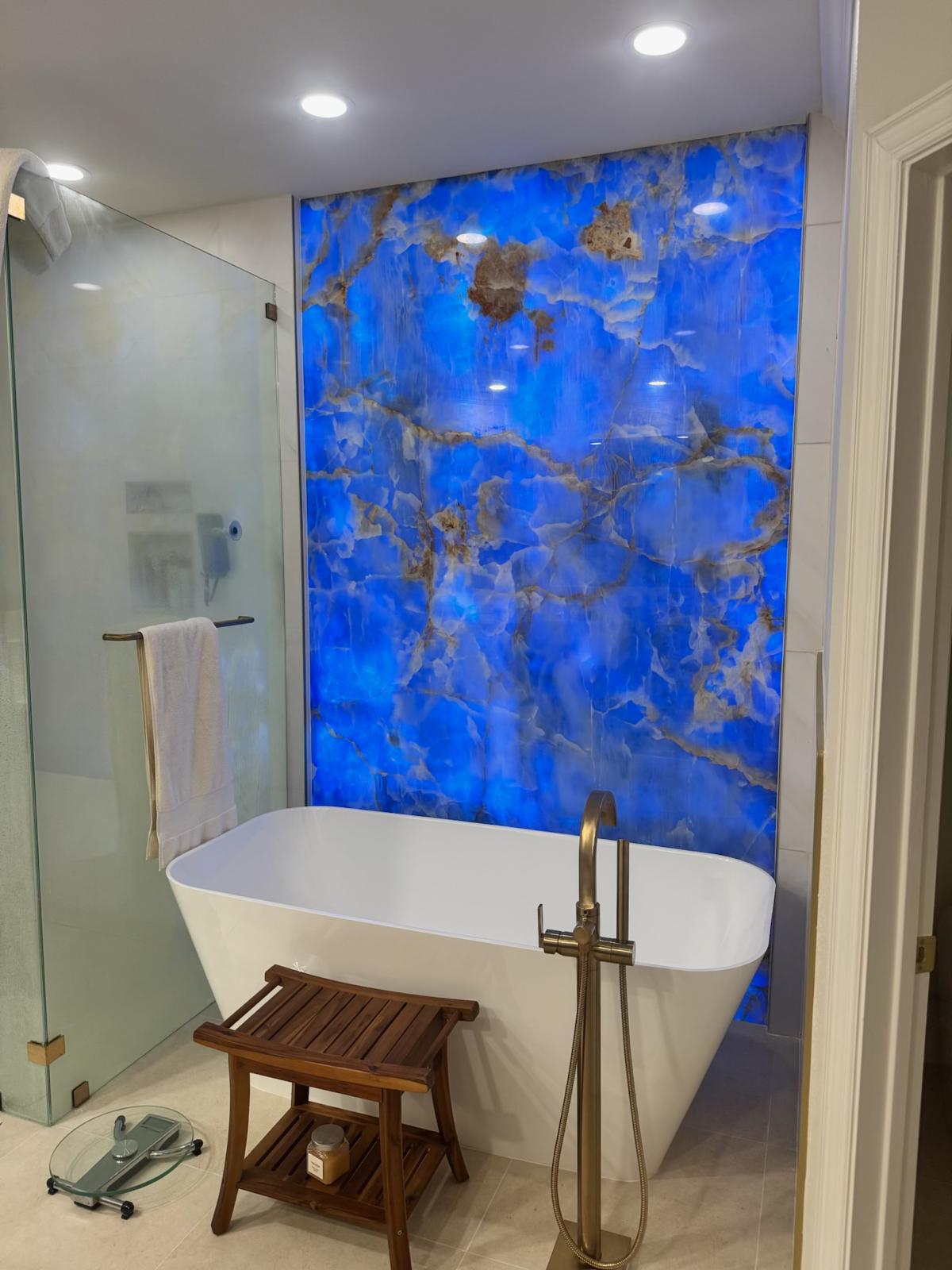
Spacing Between the LED Lighting and Onyx
Proper separation between the lighting system and the stone is an important part of creating even illumination.
For horizontal applications such as kitchen islands, countertops and bar tops, a typical Nu World assembly consists of a plywood subtop, a 1/4-inch LED light panel, a 1/2-inch clear acrylic spacer and the translucent stone above.
The clear acrylic spacer creates separation between the illuminated panel and the onyx while also providing continuous support underneath the stone.
Extremely translucent or crystalline material can be less forgiving than more diffused stone. Depending on the slab, additional diffusion or separation may be required to prevent the lighting system from becoming visible through the finished surface.
We discuss this issue in more detail in our article on hotspots and visible panel seams in backlit stone.
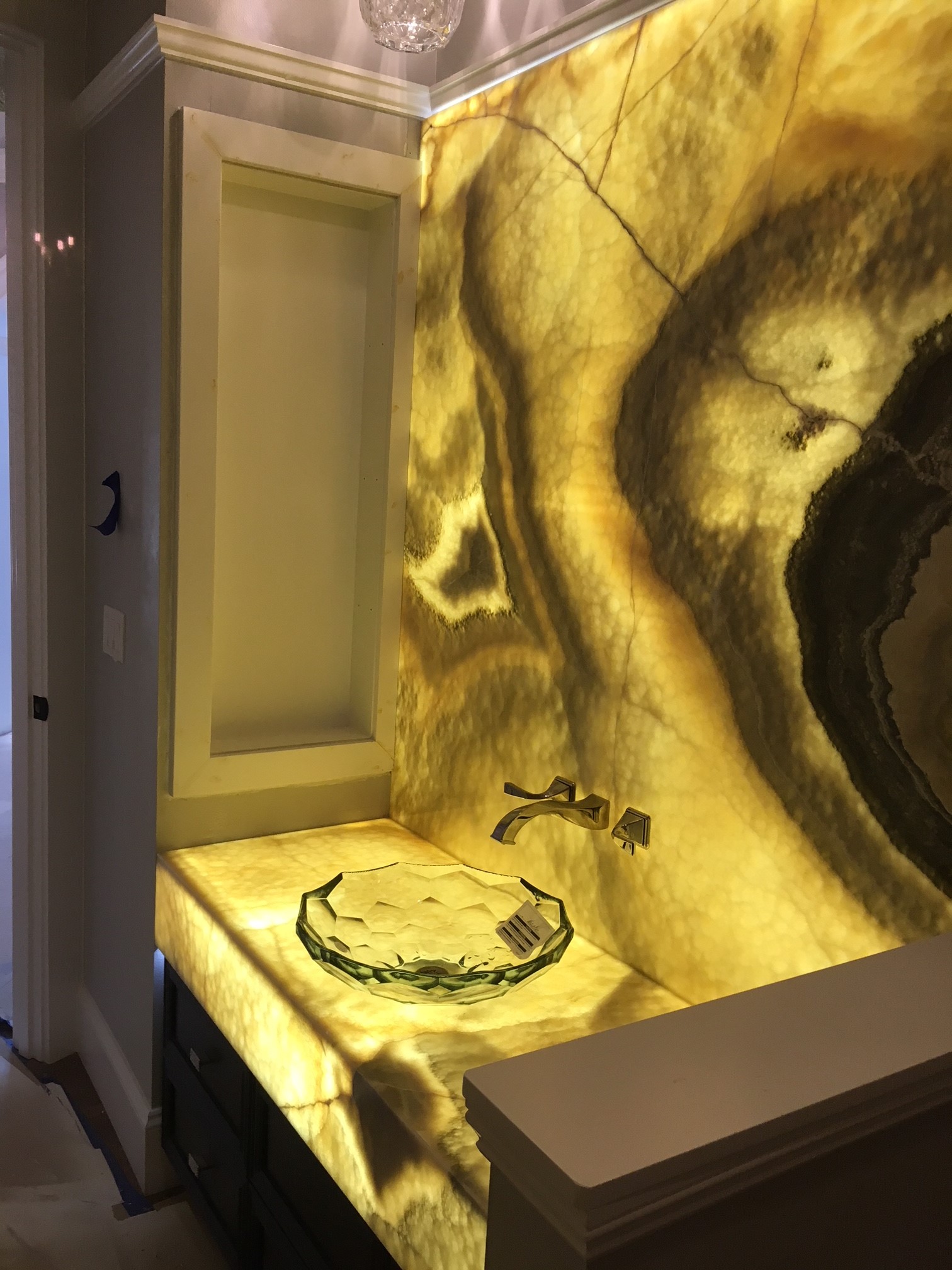
How to Backlight Onyx Walls and Backsplashes
Vertical onyx installations are somewhat different from horizontal countertops because the lighting and stone can be supported differently.
Depending on the project, a vertical installation may use an air gap or diffusion layer between the LED lighting and the stone. The correct arrangement depends on the translucency of the onyx, the lighting system being used and the construction of the wall.
We have a separate technical article specifically covering how to install LED backlighting behind stone on vertical surfaces, including onyx walls, backsplashes and feature walls.
That article covers mounting methods, diffusion, wiring and other considerations for vertical installations in considerably more detail.
Avoiding Hotspots Behind Backlit Onyx
One of the most common problems with poorly designed backlighting is seeing the lighting system through the stone.
Because some varieties of onyx are extremely translucent, they can reveal individual LEDs, bright lines, dark areas and transitions between lighting panels. The more transparent the stone, the more important panel layout, spacing and diffusion become.
This is another reason we recommend testing the actual onyx together with the proposed lighting system before the final installation whenever possible.
The finished result should make the onyx itself appear to glow. Your eye should be drawn to the colors, veins and natural characteristics of the stone rather than to the LEDs behind it.

Choosing the Right Color Temperature for Onyx
Color temperature can dramatically change the appearance of illuminated onyx.
Honey, amber, cream and gold onyx can respond beautifully to warmer lighting, while white, blue and multicolored onyx may benefit from a more neutral white that allows the natural colors of the stone to remain dominant.
There is no single color temperature that is perfect for every slab. Whenever possible, compare different color temperatures against the actual stone before making the final decision.
For a more detailed explanation, see our article on choosing the best color temperature for backlighting stone.
Plan the Backlighting Before Installing the Onyx
The best time to design an onyx backlighting system is before the stone is fabricated and installed.
Panel dimensions, seams, cutouts, wiring routes, power supplies, dimming and future service access should all be considered during the planning stage. This is particularly important for permanent installations such as kitchen islands and large architectural walls where accessing the lighting system later may be difficult.
Power supplies and other serviceable electrical components should be installed in accessible locations rather than permanently enclosed behind the stone.
Backlit Onyx Countertops, Islands, Bars and Walls
Onyx can be used in many different illuminated applications, including kitchen islands, bar tops, reception desks, bathroom vanities, backsplashes and large feature walls.
The basic principle remains the same: test the stone, create uniform illumination behind it, provide appropriate separation or diffusion, and design the lighting system around the actual characteristics of the material.
For an example of a completed residential installation, take a look at our backlit onyx kitchen island project in West Palm Beach, Florida.
Backlighting Onyx Successfully
Onyx is naturally suited to architectural backlighting, but the quality of the finished installation depends heavily on what happens behind the stone.
A successful backlit onyx installation starts by testing the actual slab. From there, the lighting system can be designed around the translucency of the stone, the dimensions of the project and the amount of space available behind the material.
When the lighting is properly planned, the result is an evenly illuminated surface that brings the natural color, depth and veining of the onyx to life without drawing attention to the lighting system itself.
Nu World Custom Lighting and Design has specialized specifically in architectural backlighting for more than 17 years, supplying custom LED backlighting systems for translucent stone projects throughout North America.
For additional information about designing and installing a backlit stone project, download our Backlighting Guide or view our Featured Projects.