
Hotspots and visible panel seams in backlit stone are usually caused by the lighting system being too visible through the material. Highly translucent stone can reveal individual LEDs, concentrated areas of light, or transitions between LED panels if the light has not had enough distance to blend before reaching the stone.
The objective of good architectural backlighting is simple: you should see the illuminated stone, not the lighting system behind it.
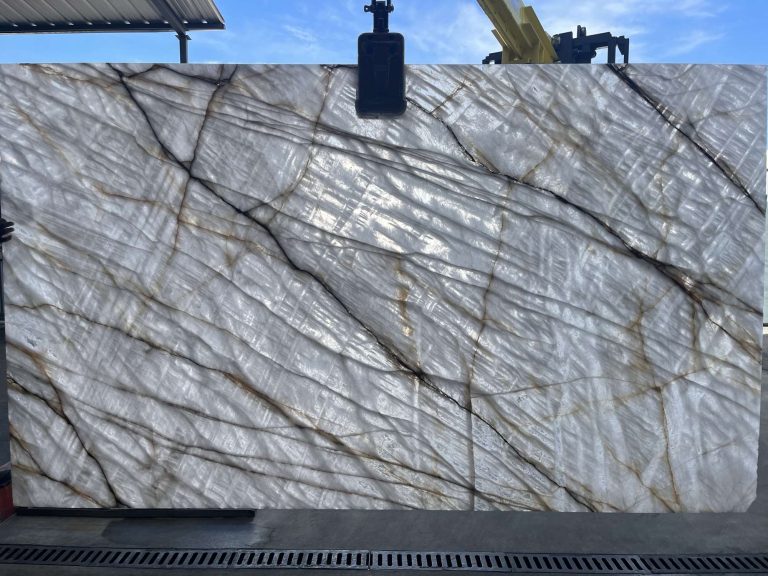
What Are Hotspots in Backlit Stone?
A hotspot is an area where the light source behind the stone appears noticeably brighter than the surrounding surface.
Depending on the type of lighting being used, hotspots can appear as individual bright dots, rows of LEDs, bright bands, or concentrated areas of light. Instead of the stone glowing as one continuous surface, the viewer begins to see the pattern or position of the lighting behind it.
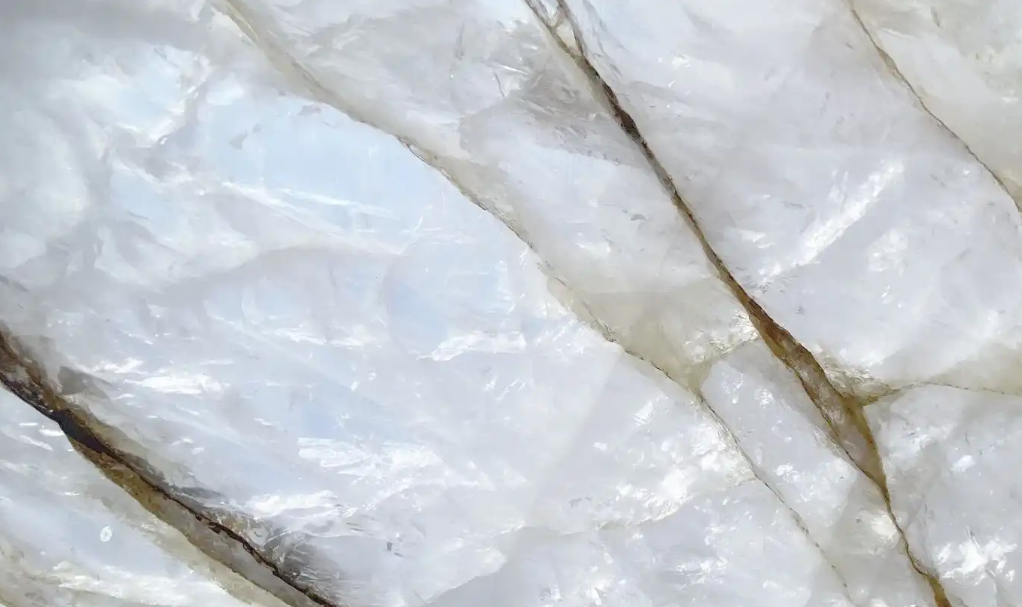
The more translucent the stone is, the less it hides. A lighting arrangement that looks uniform behind a denser material can become clearly visible behind a highly crystalline or glass-like slab.
Why Can I See Individual LEDs Through the Stone?
If you can identify individual LEDs or distinct bright points through the finished stone, the light source is generally too concentrated or too close to the stone for that particular material.
Direct-view LED products contain individual light sources positioned at intervals. Those individual points of light need enough distance to spread and overlap before the light reaches the stone.
If there is not enough separation, the stone can reveal the LED pattern underneath it.
This is especially noticeable with very translucent stone because there is less natural diffusion to disguise the individual light sources.
Why Can I See Seams Between LED Panels?
Large backlit surfaces often require more than one LED light panel. Where two panels meet, there is a physical transition between the illuminated surfaces.
With highly translucent stone, that transition can sometimes become visible as a darker line, brighter line, subtle change in brightness, or recognizable panel boundary.
The stone is simply transmitting differences in the amount of light reaching it. If the transition between panels is visible at the lighting level, a sufficiently translucent slab may reveal it at the finished surface.
The objective is therefore not simply to place enough LED panels behind the stone. The light from the separate panels needs to visually blend so that the finished surface appears continuous.
Why a 1/2-Inch Clear Acrylic Spacer Helps
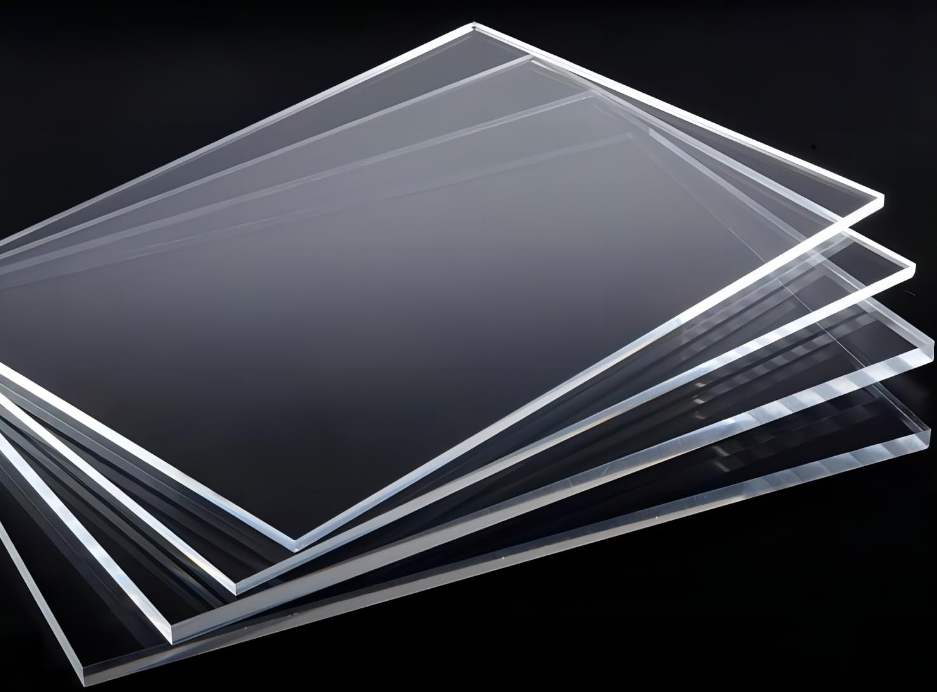
For many horizontal backlit stone applications using Nu World frameless LED light panels, we recommend a 1/2-inch clear acrylic spacer between the LED panel and the translucent stone.
The clear acrylic is not another light source and it is not intended to diffuse the light by making the material cloudy. It is simply clear acrylic used to create physical separation between the illuminated panel and the stone.
That additional distance gives the light more opportunity to blend before it reaches the finished surface, helping reduce the visibility of panel transitions and small variations in illumination.
More Distance Can Improve Light Blending
There is a common assumption that the lighting should always be positioned as close to the stone as possible. That is not necessarily the case.
Increasing the distance between the light source and the stone can improve uniformity because the light has more room to spread and blend before reaching the surface.
This is particularly important with lighting systems where individual LEDs face directly toward the stone. If the LEDs are very close to a highly translucent slab, the stone may reveal each individual point of light. Moving the light farther away allows those points to overlap and become less distinguishable.
For vertical applications, a larger air gap can therefore be beneficial. A cavity of several inches is not automatically a disadvantage. In many cases, the additional distance helps create smoother illumination.
The important question is not simply “How close is the light to the stone?” It is “Has the light blended evenly before it reaches the stone?”
Highly Translucent Stone Is Less Forgiving
Not all translucent stone behaves the same way.
Some slabs naturally diffuse the light because of their density, color and internal structure. Other materials contain extremely translucent crystalline areas that allow much more direct light transmission.
Those highly translucent areas can reveal lighting imperfections that would be invisible through a less translucent material.
Cristallo Vitrum is a good example. Its glass-like crystalline formations can transmit a significant amount of light, which makes the backlighting dramatic but also makes uniform light distribution especially important.
Why Testing the Actual Stone Matters
Whenever possible, the actual slab should be evaluated with light behind it.
Looking at stone under normal room or stone-yard lighting does not necessarily show how it will behave when illuminated from behind. Backlighting can reveal dramatic differences in translucency across the same slab.
A simple light test can show which areas transmit the most light and how easily the material reveals the light source behind it.
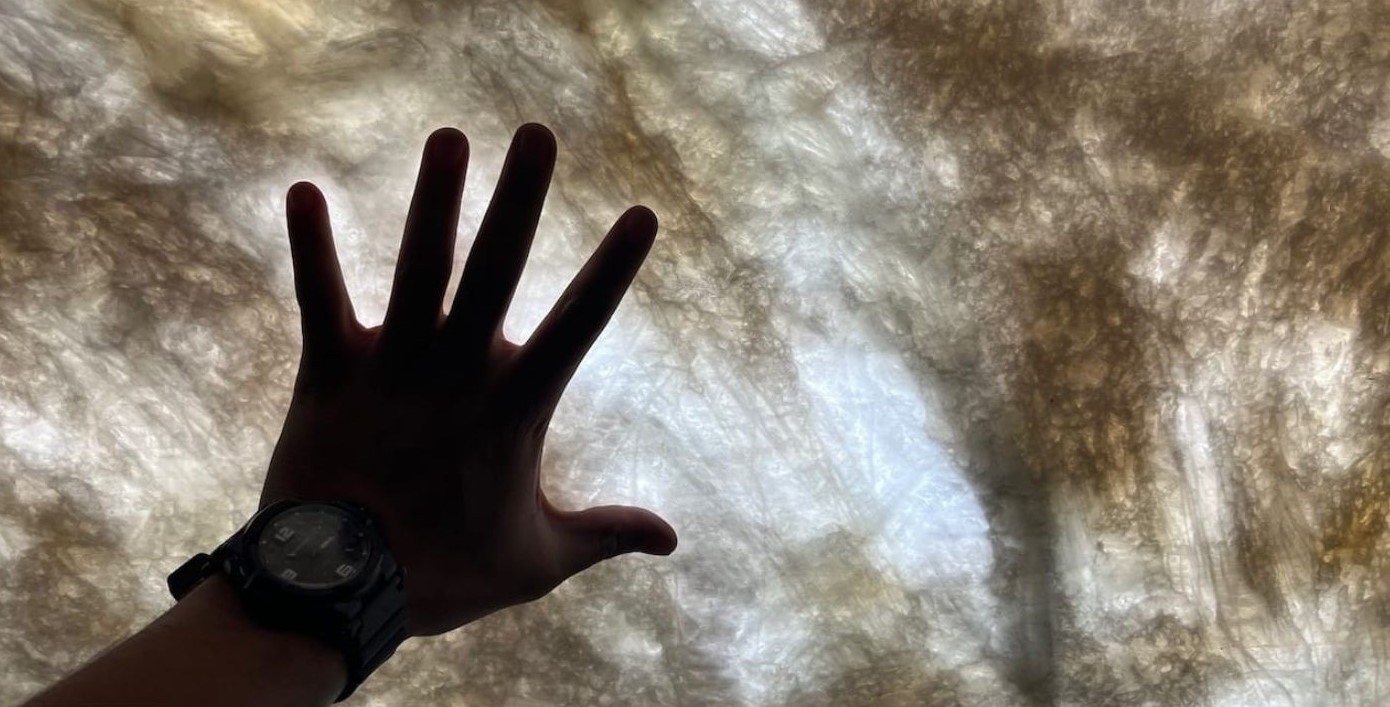
This is particularly useful with highly crystalline stone. One section of a slab may diffuse the light considerably, while another almost glass-like section may reveal much more of the lighting system.
Why Panel Layout Matters
When several LED panels are required behind one continuous slab, the panel layout should be planned so that the illuminated surface remains as consistent as possible.
At Nu World, our custom frameless LED light panels are manufactured to suit the dimensions of the project. On larger surfaces, the illuminated area is divided into practical panel sizes while keeping uniformity across the finished surface in mind.
The goal is not for someone looking at the finished stone to be able to identify the size or position of every panel behind it.
The panel layout should disappear visually once the stone is illuminated.
What Causes a Bright Line Between Panels?
A visible panel transition does not always appear as a dark seam. Sometimes it appears as a brighter line.
This occurs when the area around a transition receives more concentrated light than the surrounding surface. A highly translucent slab can transmit that difference and make the joint appear brighter.
Adding more light is not necessarily the solution. The objective is uniform light distribution, not simply maximum brightness.
A backlighting system can be extremely bright and still produce a poor result if the viewer can clearly identify where that light is coming from.
Hotspots vs. Natural Variation in the Stone
Not every bright or dark area in backlit stone is a lighting problem.
Natural stone varies. Veining, mineral deposits, crystalline areas, resin-filled sections and differences in density can all change the amount of light passing through the slab.
If a brightness variation follows the LED pattern, panel edge or panel shape, it is more likely related to the lighting system.
If the variation follows the veining, crystals or natural structure of the stone, it is more likely being created by differences in the stone itself.
This distinction is important before attempting to correct a perceived hotspot or seam.
The Bottom Line
If you can see individual LEDs, the light generally needs more opportunity to blend before reaching the stone.
If you can see panel seams or boundaries, the transition between the illuminated surfaces is being transmitted through the stone.
If you can see a bright line, there may be excessive light concentration in that area.
If the brightness changes follow the natural crystals or veining, you may simply be seeing differences in the stone’s translucency rather than a defect in the lighting.
Highly translucent stone is particularly unforgiving, which is why proper separation, consistent illumination, thoughtful panel layout and testing the actual stone are so important.
The finished objective is always the same: see the stone glowing—not the lighting system behind it.
Nu World Custom Lighting and Design has specialized specifically in architectural backlighting for more than 17 years. For additional technical information, visit our LED Backlighting Products, browse our Featured Projects, or download the Nu World Backlighting Guide.