
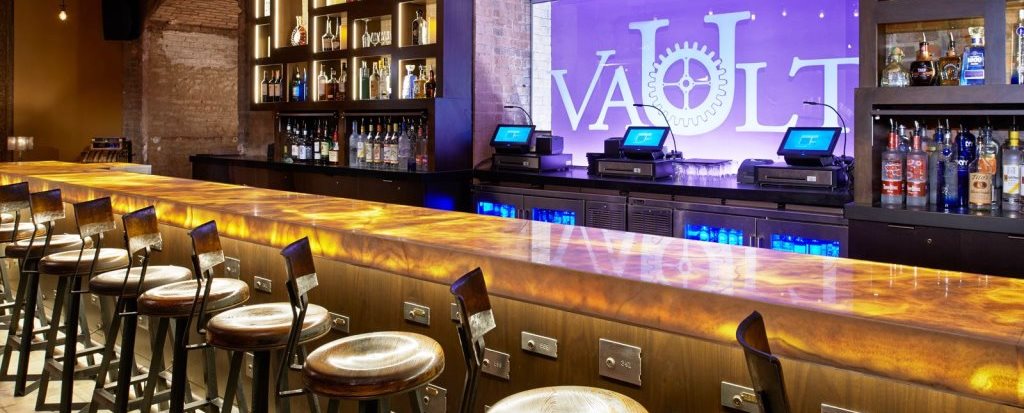
The truth about LED panel lifespan, power supplies, L70, and 50,000–100,000-hour LED lifespan claims.

The Short Answer
LEDs generally do not “burn out” the way a traditional light bulb does. Their light output normally declines gradually over time. In an architectural backlighting system, a power supply or driver may also require replacement before the LED panel itself reaches the end of its useful life.
At Nu World Custom Lighting and Design, after more than 17 years specializing in architectural backlighting, we generally advise clients to plan around approximately 25,000–35,000 operating hours for our LED backlighting systems.
We intentionally use a conservative, real-world planning range rather than simply advertising the largest theoretical LED lifespan number available.
LEDs Don’t Normally Burn Out Like Traditional Light Bulbs
It is probably the single most common question we have been asked during more than 17 years of specializing in architectural backlighting:
“What happens when the LEDs eventually burn out?”
It is an important question, particularly when LED lighting is being used behind an expensive piece of translucent stone such as Cristallo Quartzite, onyx, marble or another permanent architectural feature.
With an incandescent bulb, the filament can break and the light simply goes out.
LEDs behave differently.
Rather than reaching one predetermined hour and suddenly switching off, LEDs more commonly experience lumen depreciation. In simple terms, their light output gradually decreases over time.
This distinction is important because a published LED lifespan should not automatically be interpreted as an expiration date.
What Does a 50,000-Hour LED Rating Actually Mean?
One of the terms commonly used when discussing LED lifespan is L70.
L70 refers to the point at which an LED is producing approximately 70% of its initial light output.
The LED may still be operating at that point. It is simply producing less light than it did when it was new.
So a 50,000-hour L70 projection does not mean:
Hour 49,999: working.
Hour 50,000: dead.
It is a lumen-maintenance measurement. It is not automatically a promise that every component in a complete installed lighting system will operate for exactly the same number of hours without service.
You can learn more about the systems we use on our LED backlighting products page.

What About Claims of 50,000, 75,000 or Even 100,000 Hours?
You will see very large lifespan figures throughout the LED industry:
50,000 hours.
75,000 hours.
Sometimes even 100,000 hours.
Are those numbers impossible?
No.
Quality LED packages can achieve extremely long lumen-maintenance projections under appropriate operating and testing conditions.
The more important question is:
What exactly does that number refer to?
An LED package’s projected lumen-maintenance life is not necessarily the same thing as the service life of a complete architectural backlighting system.
The complete system contains more than LEDs. It also includes components such as power supplies or drivers, wiring, electrical connections and, depending on the project, dimming or control components.
That is why we are cautious about presenting a very large laboratory or component-level projection as though it were a guarantee for an entire installed system.
We would rather give a client a realistic planning expectation and explain what the number actually means.
Nu World’s Realistic Expectation: Approximately 25,000–35,000 Operating Hours
For our custom LED backlighting systems, our general guidance is to plan around approximately:
25,000–35,000 operating hours.
This is a conservative planning range, not a countdown clock.
A panel does not automatically fail at 35,001 hours. Actual service life can vary depending on usage, operating conditions and other factors.
What Does 25,000–35,000 Hours Mean in Years?
| Average Daily Use | 25,000 Hours | 35,000 Hours |
|---|---|---|
| 4 hours/day | About 17 years | About 24 years |
| 6 hours/day | About 11 years | About 16 years |
| 8 hours/day | About 8.5 years | About 12 years |
| 12 hours/day | About 5.7 years | About 8 years |
A residential backlit kitchen island operating for a few hours each evening is therefore very different from a hotel, restaurant, retail or commercial feature operating for much of the day.
You can see examples of both residential and commercial applications in our Featured Projects and LED Backlighting Gallery.
See a Nu World Frameless LED Light Panel
The video below shows the type of frameless LED light panel used in many Nu World architectural backlighting applications.
What Actually Determines How Long LED Backlighting Lasts?
There is no single lifespan that applies to every LED installation. Several factors influence long-term performance.
Heat
Heat is one of the most important factors affecting the life of LEDs and electronic components. Higher operating temperatures can accelerate degradation.
Operating Hours
A system operating four hours per day accumulates operating hours much more slowly than a commercial system operating 12, 16 or more hours per day.
Electrical Loading
How LEDs and their associated electronics are driven affects operating conditions and long-term stress.
Component Quality
Not all LEDs, power supplies, wiring and electrical components are manufactured to the same standard.
A lifespan claim printed on a specification sheet is therefore only one part of evaluating a backlighting system.
The Complete System
Long-term reliability depends on more than the LED package alone.
This is why at Nu World we look at architectural backlighting as a complete system rather than focusing only on the largest advertised LED-hour figure.
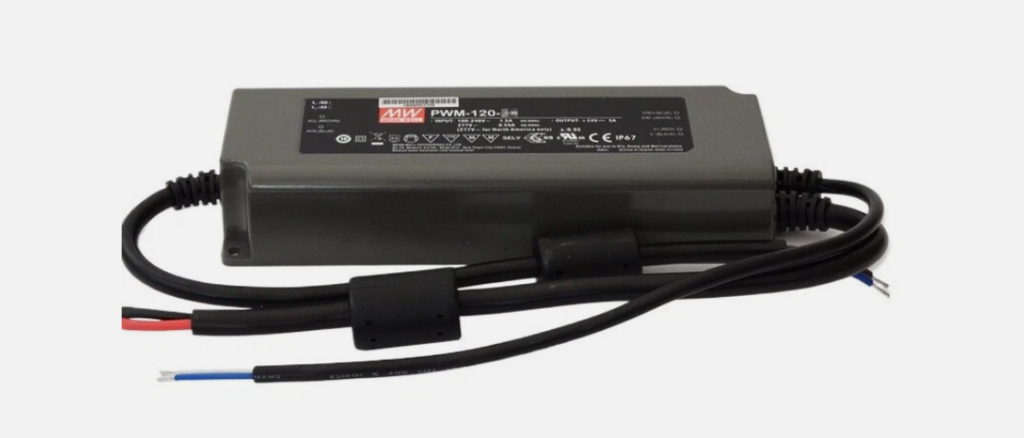
The Power Supply May Require Replacement Before the LEDs
This is one of the most important points we explain to clients.
If something eventually requires replacement, it may be the power supply or driver rather than the LED panel itself.
The LED panel operates from low-voltage DC power. A power supply converts incoming electrical power into the appropriate output required by the lighting system.
The power supply contains electronic components of its own, and those components also have a finite service life.
This is why we treat the power supply as a serviceable component.
Power supplies should remain accessible so that if one eventually fails, an appropriate replacement can be installed without automatically assuming that the LED panel itself has failed.
What Can a Power Supply Failure Look Like?
A power-supply problem can present differently from normal long-term LED lumen depreciation.
Depending on the failure, symptoms can include:
- Flickering
- Intermittent operation
- Incorrect light output
- A section no longer illuminating
- Complete loss of power to the connected lighting
That does not automatically mean the embedded LED panel has failed.
The power supply and electrical system should be evaluated before assuming the panel itself requires replacement.
What Happens If One LED Actually Fails?
A Nu World frameless edge-lit panel uses multiple LEDs to introduce light into optical acrylic.
The illumination of the surface is therefore not dependent on one individual LED producing all of the light.
An isolated LED failure does not automatically mean that the entire panel suddenly goes dark.
Depending on the location and nature of a failure, there may eventually be a localized change in light output, but this is fundamentally different from a conventional single light bulb failing.
This is another reason the phrase “when the LEDs burn out” can be misleading.
There is not necessarily one moment when every LED simultaneously reaches the end of its useful life.
LED Lifespan in a Large Commercial Backlighting Application
Commercial installations are useful for understanding the difference between calendar age and operating hours.
A feature wall operating for long periods every day accumulates LED operating hours much faster than a residential feature used only in the evening.
For more residential and commercial examples, visit our LED Backlighting Gallery.
Quality Matters When It Comes to Long-Term Reliability
The initial cost of a backlighting system is only one part of the equation.
When lighting is being incorporated into expensive translucent stone or another permanent architectural feature, choosing the cheapest system available may not provide the best long-term value.
LED quality, power-supply quality, electrical components and overall system quality can all influence reliability and lifespan.
A quality backlighting system may cost more initially, but long-term reliability should be considered alongside the upfront price.
Sometimes the cheapest option at the beginning is not the least expensive option over the life of the project.
For an idea of what professional architectural stone backlighting typically costs, watch the video below.
If you are researching a project, you can also download the Nu World Backlighting Guide or review our Featured Projects.
Why We Prefer Conservative Lifespan Claims
We could simply advertise the largest projected number available.
It would certainly sound impressive.
Instead, after more than 17 years specializing specifically in architectural backlighting, we prefer to distinguish between the projected lumen-maintenance life of an LED package and a realistic expectation for a complete installed system.
LED technology can be extremely reliable, but a complete system contains more than LEDs.
Power supplies, wiring, electrical connections and controls can all affect long-term service.
For that reason, our guidance remains straightforward:
Plan around approximately 25,000–35,000 operating hours, understand that LEDs normally depreciate gradually rather than all burning out at once, and keep serviceable components such as power supplies accessible.
That is a much more useful answer than simply printing “100,000 HOURS” on a brochure without explaining what that figure actually represents.
Frequently Asked Questions About LED Backlighting Lifespan
How long do LED backlighting panels last?
Nu World generally advises clients to plan around approximately 25,000–35,000 operating hours for our LED backlighting systems. Actual service life varies with usage and operating conditions.
Do LEDs suddenly burn out?
Usually not in the same way as a traditional incandescent bulb. LEDs more commonly experience gradual lumen depreciation over time, although individual electronic components can still fail.
What does L70 mean?
L70 is the point at which an LED is producing approximately 70% of its initial light output. It does not necessarily mean that the LED stops operating at that point.
Are 50,000-hour LED lifespan claims legitimate?
They can be. The important question is what the figure describes. It may refer to projected LED-package lumen maintenance rather than a guarantee that every component in a complete installed backlighting system will operate for 50,000 hours without service.
Can LEDs really last 100,000 hours?
LED technology can achieve very long projected lifespans under appropriate conditions.
A 100,000-hour figure should still be examined in context. An LED package, a laboratory projection, a complete luminaire and an installed architectural backlighting system are not necessarily the same thing.
What is more likely to need replacement first: the LED panel or the power supply?
Either can eventually require service, but the power supply or driver can be an earlier service item.
This is why we recommend keeping power supplies accessible.
Can a power supply be replaced without replacing the LED panels?
Yes. Provided the power supply was installed in an accessible location, it can be replaced with an appropriate compatible unit without automatically replacing the LED panels.
Does one failed LED make the entire panel go dark?
Not necessarily. Nu World edge-lit panels use multiple LEDs to introduce light into the optical acrylic, so an isolated LED failure does not automatically mean the entire illuminated panel goes dark.
Does daily usage make a big difference?
Yes. LED life is measured in operating hours.
A residential feature used four hours per day accumulates operating hours far more slowly than a commercial installation operating 12 or more hours per day.
The Bottom Line: What Happens When LED Backlighting Eventually Wears Out?
LED lifespan is not an expiration date.
LEDs generally lose output gradually. Power supplies and other electronics can require service independently of the LEDs. An individual LED failure does not necessarily disable an entire edge-lit panel.
And figures such as 50,000 or 100,000 hours need to be understood in the context of exactly what is being rated.
At Nu World Custom Lighting and Design, we prefer to give clients a conservative real-world planning expectation of approximately 25,000–35,000 operating hours rather than relying solely on theoretical maximums.
After more than 17 years specializing in architectural backlighting, we believe that is a more useful and responsible way to answer the question we hear more than any other:
“What happens when the LEDs eventually burn out?”
They don’t normally all burn out at once.
And when a backlighting system is properly designed, the components most likely to require service can be planned for accordingly.
Learn More About Architectural LED Backlighting
Explore our LED Backlighting Products,
view our Featured Projects,
browse the LED Backlighting Gallery,
or download our Backlighting Guide.
If you have drawings, approximate dimensions or a translucent stone you are considering for an upcoming project, contact Nu World Custom Lighting and Design for project-specific information.
Mathew Barlett
Backlighting Integration Specialist
Nu World Custom Lighting and Design
T: 1-604-900-2313
C: 236-818-3910
E: info@nu-wo.com